Before you go
What you are watching
The training has no commentary, so here is a reader's key: the piaffe, the passage, the pirouette, the airs above the ground and why some horses are dark.
Reserve a place for the training ↗Why read this first
Nobody speaks during the morning training, so an hour of skilled riding can pass as a blur of horses walking and trotting. Knowing five terms turns it into something you can follow. The sources below are Wikipedia's articles on each movement and the riding school's own pages, and what follows keeps close to them. None of it promises that a given movement will appear on your morning, because the exercises change with each day's schedule. Treat it as a key to the work, not a list of what is on.
The piaffe
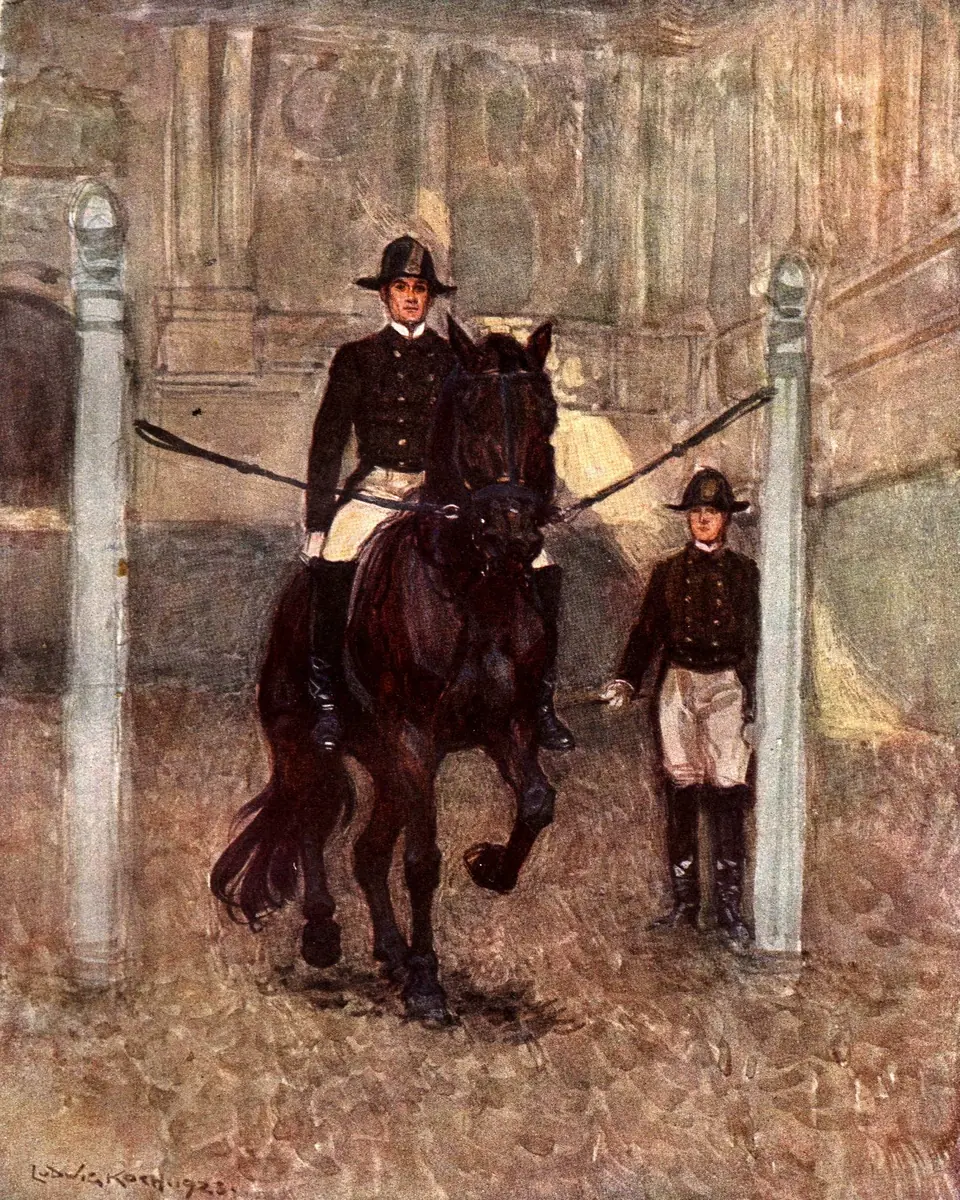
The piaffe is a highly collected, cadenced trot in place or almost in place. The hindquarters lower, the joints of the hind legs bend, and the front end stays light and mobile, with a clear rhythm and a moment of suspension between footfalls. It looks like a horse dancing without travelling. It is a Grand Prix level movement, and it matters for another reason too: the horse enters the levade and the airs above the ground from the piaffe, so it is a building block as well as a show piece.
The passage
The passage is a very collected, very elevated trot. The horse lifts a diagonal pair of legs high and holds the leg in the air longer than in any other trot, so that it seems to move in slow motion. Wikipedia describes it as looking as if the horse were dancing. It needs a horse that is well settled in its training and a rider who can keep it energetic and calm at once. At the school, the passage is one of the movements shown as part of the high school work.
The pirouette
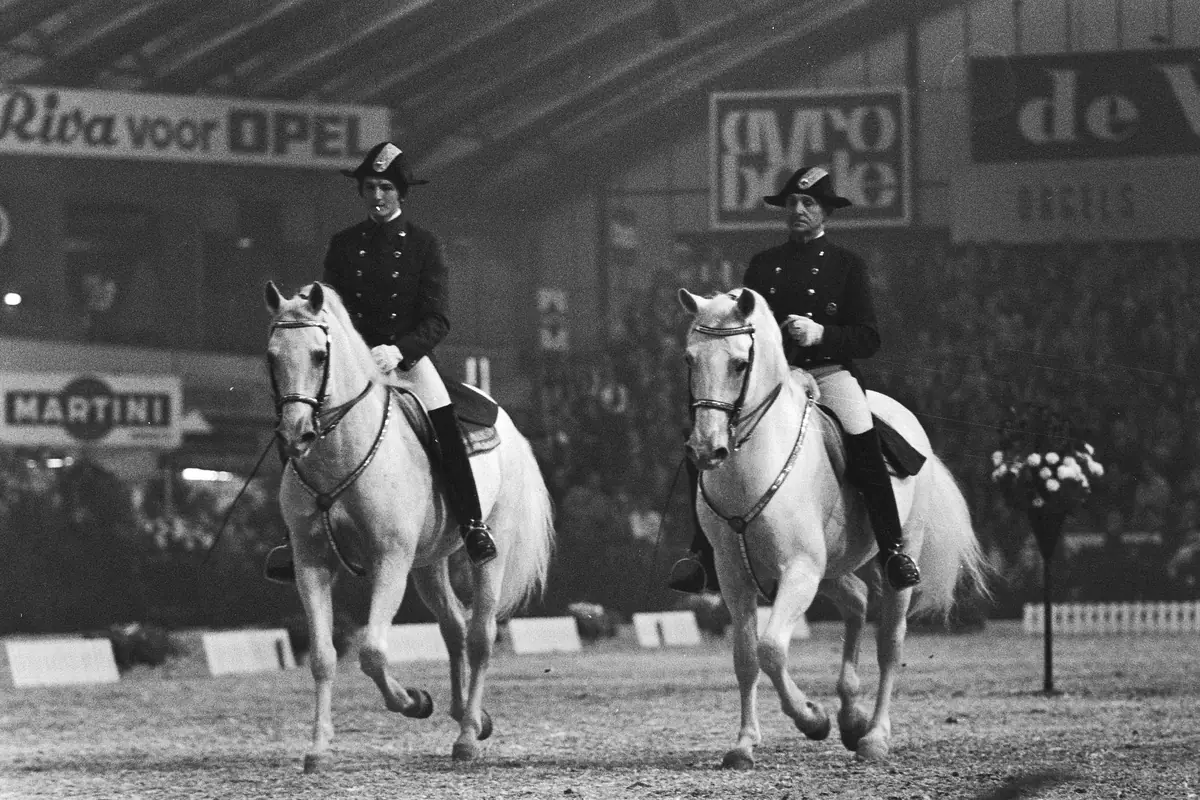
In a pirouette the horse circles with its front end around a smaller circle made by its hind end. The front legs and the outside hind leg travel around the inside hind leg, and the horse stays slightly bent in the direction of travel. It can be done at the walk or the canter, and it can be a quarter, half, three-quarter or full turn. Ideally it is almost in place. In the canter a half-pirouette should take three strides and a whole one six to eight. When it looks easy, that is the training showing.
The airs above the ground
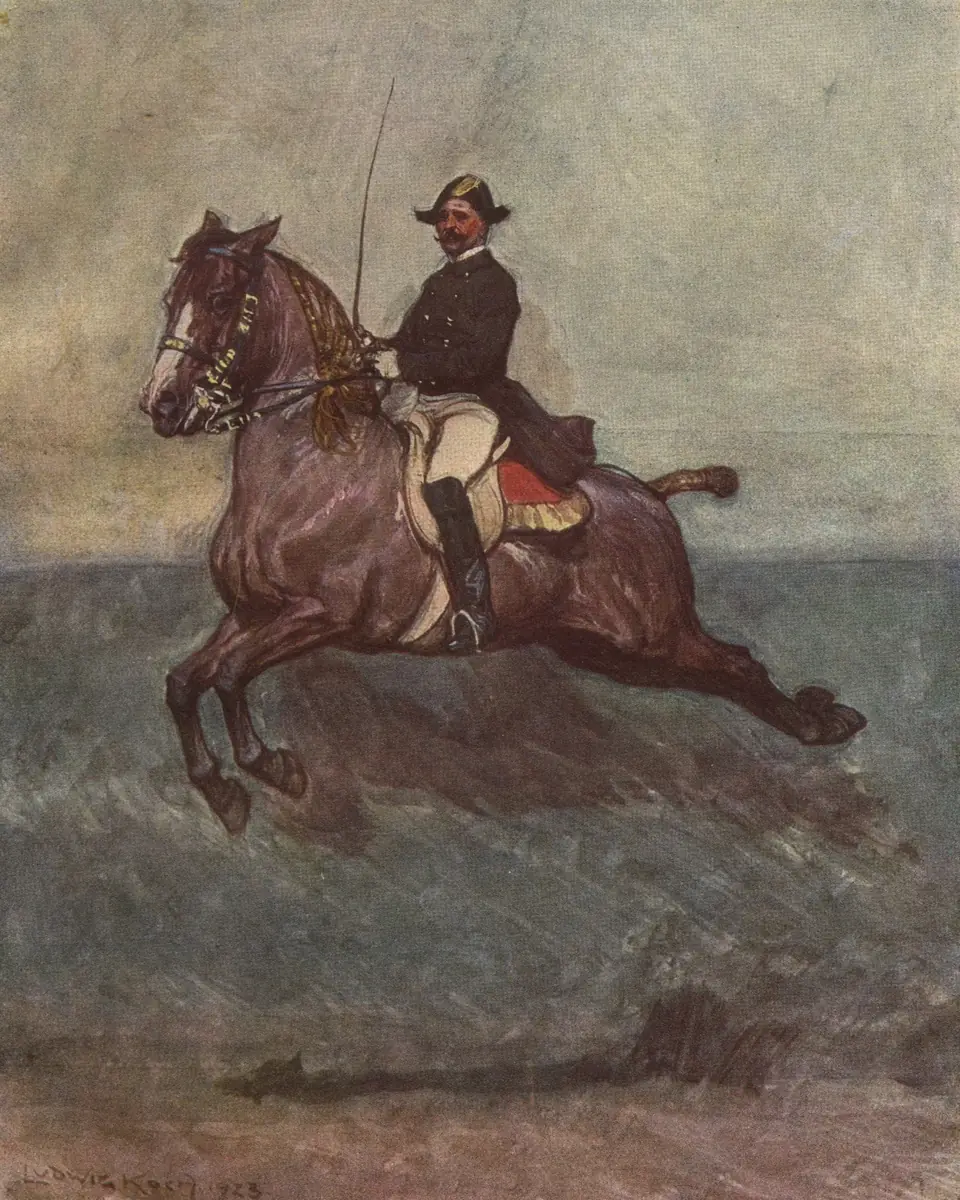
These are the school jumps, in which the horse leaves the ground: the levade, the courbette, the capriole and others. In the levade the horse holds its forehand raised at a low angle with its weight on its haunches. In the courbette it hops forward on its hind legs with its forelegs tucked. In the capriole it leaps and kicks out with its hind legs, which Wikipedia calls the most difficult of all. The riding school says these are rarely shown in the morning session.
Dark horses and grey ones
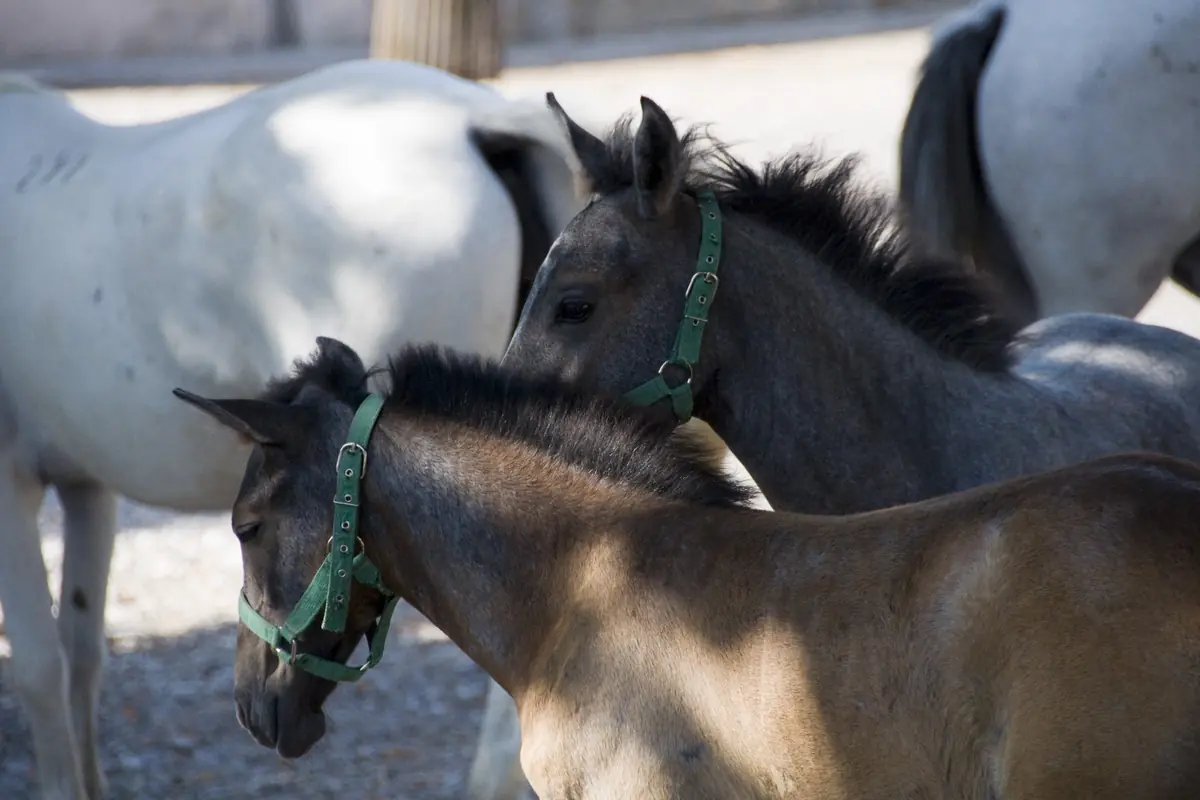
Lipizzaners are born dark, usually bay or black, and grey with age, a process complete between six and ten years of age. So the white stars of the school are grey horses, and the young stallions you see in the hall, still in their early schooling, are often darker. The school adds a tradition: it always keeps at least one brown Lipizzaner stallion in its stables, and the brown horse is thought to bring good luck. If you see a dark horse working among the grey ones, that is why.
What good looks like
Training is about calm more than flourish. Wikipedia's description of the pirouette says the horse should remain relaxed, engaged and responsive, and the same standard runs through the whole of classical riding, which sets out to study the natural movements of the horse and polish them through systematic training. Watch for a horse that looks unhurried and a rider who looks still. The sign of success is that nothing seems to be happening. That quiet is what an hour of watching is for.
Sources