Start here
Vienna morning training: worth it?
Is the morning training at the Spanish Riding School worth it, or should you wait for a performance? What you see, what you do not, and who it suits.
Reserve a place for the training ↗Quick answer
Worth it if you want to watch riders school Lipizzaner stallions in a Baroque hall for about an hour, and you accept that it is training, not the performance. There is no commentary, filming is not allowed and the famous leaps are rarely shown. The 3.9 rating comes from visitors who expected a show. If you want the choreography and the jumps, wait for a performance.
The morning at a glance
| This session | |
|---|---|
| Length | About an hour |
| What it is | Daily training |
| Commentary | None |
| Music | Classical Viennese |
| School jumps | Rarely shown |
| Filming | Not allowed |
| Children | 3 to 5 free on a lap |
| Stairs | No lift to galleries |
The short verdict
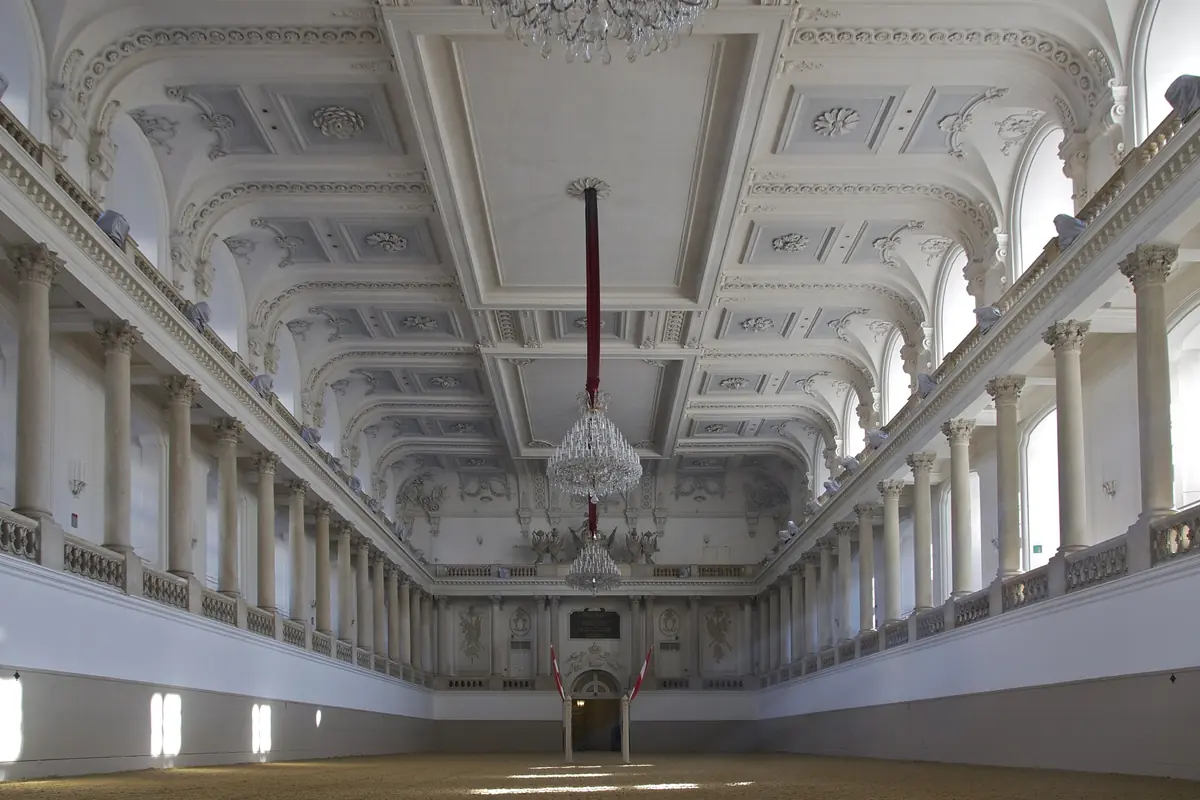
Book it if you like horses, riding or Baroque rooms and want an hour that is calm rather than dramatic. You watch riders on Lipizzaner stallions working through the day's schooling, in a hall built for exactly that between 1729 and 1735, to classical Viennese music. Skip it if you came for the display everyone has seen photographed: a fixed programme, formation riding and the leaps. That is a performance. This is the working morning with the doors open. The next few sections say what that means, so you can decide before you pay.
What the ticket covers
The ticket admits you to the public part of the stallions' daily training. The calendar lists the mornings on which it runs, which are selected mornings, not every day, and your confirmation states the start time and the entrance to use. The price shown on the booking page is the starting price, so look at what your chosen place offers before you pay. Food and drink are not part of it, and the building has no storage for coats or luggage, so bring only what you can keep on your lap.
- A place at the morning training session
- About an hour of schooling with classical Viennese music
- Children aged 3 to 5 free on an adult's lap; under-3s are not admitted
- Not included: any commentary or explanation of the exercises
Read next: Training or the stables tour?
Training is not a performance
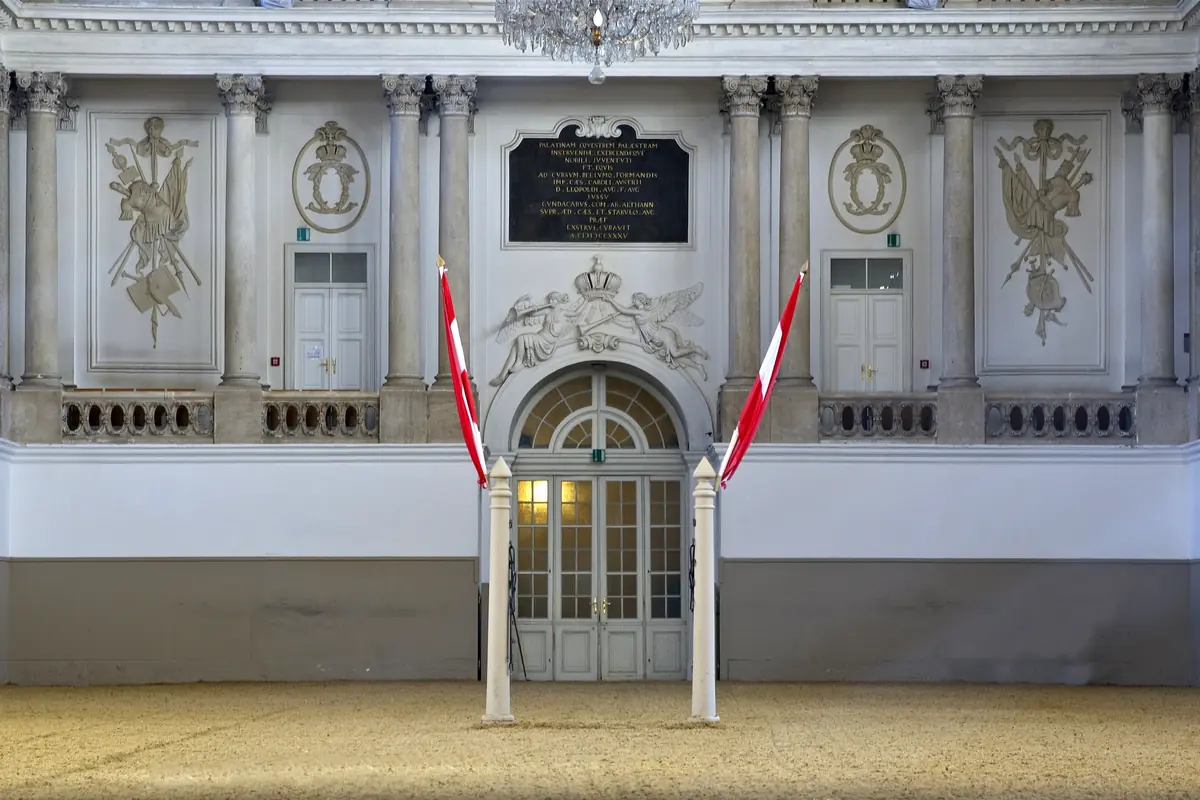
The riding school's own explanation is short. The morning session is the horses' regular gymnastic training and schooling. It is not a fixed programme, and the exercises differ from day to day with the schedule and with the condition of each stallion. A performance presents the highlights of classical riding as a programme, with choreographed sections and the school jumps. Both take place in the same hall, but they are different things to watch. Nobody can tell you in advance what order the exercises will come in, because there is no order to publish.
What you will see
The booking describes relaxation exercises, the refining of movement and strengthening work, and the school's own page adds the schooling of the young stallions. Expect quiet, repeated work rather than set pieces: a horse and rider going over a movement until it is right. For some visitors that is the appeal, because it shows how long the polish takes. For others it is slow. The music helps, since it is classical Viennese music throughout, but it is a lesson you are watching, and a lesson has pauses.
- Young stallions, many of them still dark, early in their schooling
- Fully trained school stallions, the grey horses the school calls its white stars
- Loosening and suppling work first, then strengthening exercises
- Each horse worked at its own level on the day
What you will not see
The school jumps, called the airs above the ground, are rarely shown in the morning session. The school says it keeps a balanced training schedule for its stallions, and the jumps are among the most demanding things a horse does. The set pieces of a performance, such as the quadrille ridden by a group of riders, belong to performances as well. Nobody speaks to the audience, so nobody names an exercise or explains why a horse is trotting on the spot. And you cannot film: photography and recording are not allowed inside, so you leave with memories, not clips.
Why the rating is 3.9
A score of 3.9 out of five is low for a Vienna booking with this many reviews. Visitors' own reviews on the booking page point to the cause: people who expected a show and found a training session. The score is a verdict on expectations more than on the horses. A reader who knows what this is and wants it stands in a different place from the reader whose disappointment pulled the average down. That gap is the reason a guide like this is worth reading before you book, and why we say plainly what the hour is.
A performance instead
Performances are a separate programme with their own tickets, and the riding school describes them as the highlights of classical riding, including the schools on and above the ground. Its pages give 45 or 70 minutes for a performance, with galas longer, against about 60 minutes for the morning session. If the jumps and the formation riding are the point of your trip, wait for one and plan your days around it. The school advises booking as early as you can, and visitor numbers rise around public holidays, so do not leave a performance to the last week.
Who this isn't for
The common thread is expectation. This hour is slower, quieter and less choreographed than the images that sell Vienna's horses, and it does not try to be anything else. If one line in this list is a dealbreaker, book something else and do not count it as a loss. A mismatch is the cheapest way to lose an hour of a short trip.
- Anyone who came for the leaps or the formation riding
- Visitors who want each movement explained
- Anyone who needs to film or photograph the horses
- Visitors who cannot manage stairs: the building has no lift, stairs lead to the galleries and the royal box, and wheelchair users are asked to write to the school in advance
- Children under 3, who are not admitted, and dogs, which are not allowed
Who it suits
Riders and former riders get the most from it, because they can read the work: a horse coming into the bit, a rider asking for one more stride. Families whose children are three or older and happy to sit still for an hour do well too, since the horses are the draw and the pace is gentle. Anyone who enjoys the craft of an old institution, and a rare chance to see a Baroque hall in daily use, will find it a calm start to a morning. First-time visitors with one morning to spare can reasonably choose it over a queue.
Choosing a morning
Pick a date from the calendar with room in your day and read your confirmation for the start time, the entrance and how to collect your ticket. The riding school's FAQ says tickets bought through outside sellers are collected at its ticket desk against the voucher, so your confirmation is the document to follow. It is also the working morning for the horses, so the content can vary. Add the walk to the main gate and a few minutes to find the entrance, and do not plan a tight connection afterwards.
Read next: Getting there and what to bring
Frequently asked questions
Is the morning training worth it for a first visit to Vienna?
Yes, if you want to watch riders school Lipizzaners in a Baroque hall and accept that it is training. It is not the performance: there is no fixed programme, the leaps are rarely shown and nobody gives commentary. If you want the show, wait for a performance.
Will I see the Lipizzaners jump?
Probably not. The leaps, called school jumps or airs above the ground, belong to the performances. The riding school's own page says they are rarely shown in the morning session, which keeps a balanced training schedule for the stallions.
Can I take photos or film?
No. Photography and filming are not allowed inside, and the riding school's page calls the ban on cameras and recording equipment strict. Plan to watch rather than record.
Is there commentary?
No. Nobody explains the exercises while the horses work, and classical Viennese music plays throughout. Read a short guide beforehand, such as the figures section on this site, and the hour will make more sense.
Can I bring children or a dog?
Children aged 3 to 5 enter free on an adult's lap, and children under 3 are not admitted. Dogs and other pets are not allowed. Wheelchair users should know the building has no lift to its galleries.
Is it the same every morning?
No. The exercises differ from day to day with the training schedule and the condition of each stallion, and the session runs only on selected mornings. The calendar on the booking page shows which.
Sources