The comparison
Training or the stables tour?
Watch the morning training or tour the stables: which visit? How the two hour-long bookings differ, what each shows, and who should choose which.
Reserve a place for the training ↗Quick answer
Choose the training to watch horses and riders working, with music and no talking. Choose the guided tour to understand the place: the halls, the tack, the stables and the history, with a guide. Both take about an hour and both ban filming. The tour is rated 4.7 against 3.9 for the training, largely because it asks less of your expectations. Neither is the performance.
Training and tour side by side
| Training | Tour | |
|---|---|---|
| Length | About an hour | About 55 minutes |
| Led by | Nobody | A guide |
| Music | Classical Viennese | None stated |
| Horses | At work | Depends on the day |
| Filming | Not allowed | Not allowed |
| Rating | 3.9 | 4.7 |
The short answer
If you have one hour and want a single answer: choose the tour if you are curious about the institution, and the training if you want to see the work itself. The tour is a guided walk through the buildings with explanations. The training is a seat in the hall and no explanation at all. Visitors who are unsure what they want, who have children with short attention spans, or who like being told what they are looking at tend to be happier with the tour. Visitors who know horses tend to prefer the training.
What the training is
The training is the public part of the horses' daily schooling in the Winter Riding School, accompanied by classical Viennese music. It lasts about an hour and runs on selected mornings. You see young stallions and fully trained school stallions doing loosening, refining and strengthening work, with different exercises on different days. There is no commentary. The school jumps are rarely shown, and photography and filming are not allowed. It is a quiet hour that rewards watching closely, and gives little to a visitor who wants to be entertained.
What the tour is
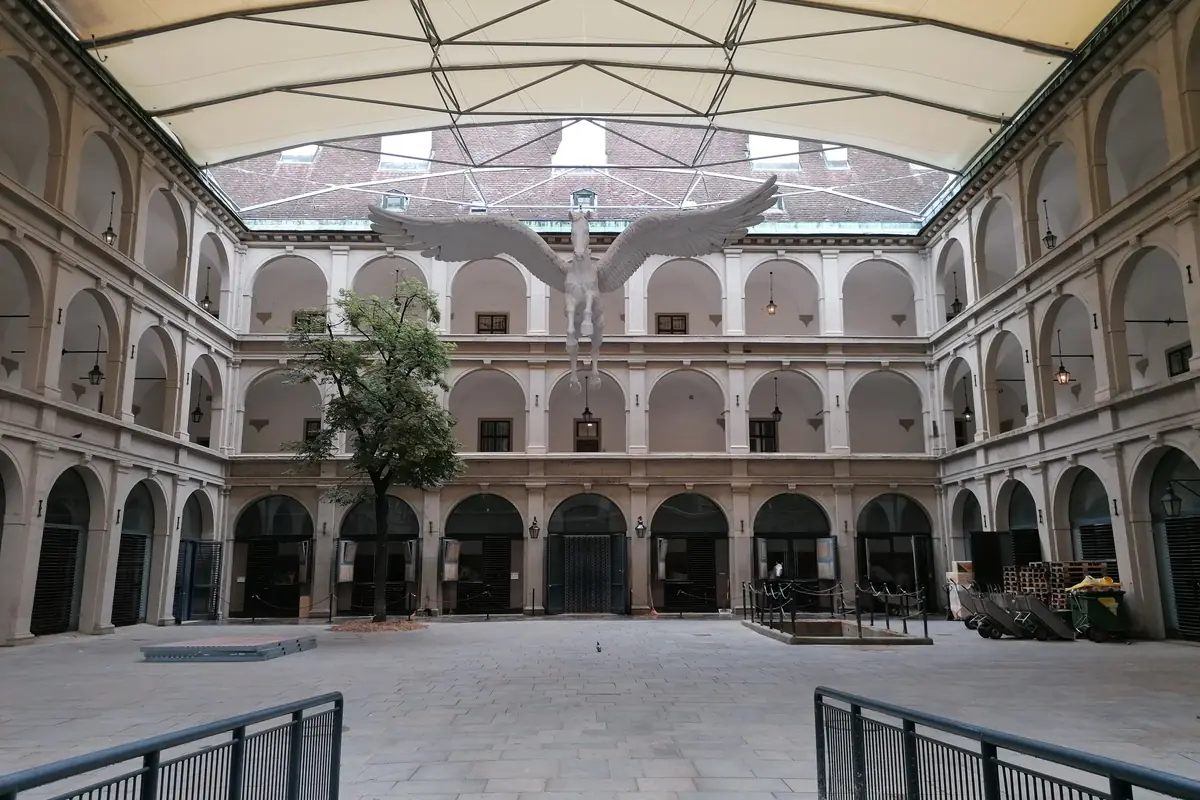
The guided tour takes about 55 minutes. The booking page lists a look behind the scenes, the Winter Riding School and the Summer Riding School with its large oval horse walker, and the Stallburg, a Renaissance building that is part of the Hofburg. The riding school's own page for its tour adds the tack room and the stallions' stables in the Stallburg. A guide leads you and explains the history and the traditions. Check the booking page for what your date's tour includes and for the language it is given in.
The two side by side
The table above holds the facts that differ. The two bookings share three things: about an hour, a ban on cameras and recording equipment, and no performance programme. They differ in who talks and what you watch. On the training you watch horses work and no one talks. On the tour a guide talks and you walk through places that the training audience never sees. The ratings, 3.9 and 4.7, partly reflect that. The tour sets an expectation it can meet, while the training is often booked by visitors who expected a show.
Read next: Vienna morning training: worth it?
Will you see horses on the tour?
Sometimes, but do not book the tour for it. The riding school's page describes the stables of the Lipizzan stallions in the Stallburg as part of its own tour, and the booking page lists the horse walker, but what is happening in the halls and the stables on the day of your tour is the horses' business. If seeing horses working is the point, the training is the booking that is built for it. If seeing where they live, the history and the buildings is the point, the tour is.
Music, talk and silence
The training has music and no talking, and the tour has talking and no music that anyone mentions. That choice matters more than it sounds. Some people find an hour of silent watching restful, and some find it awkward in a hall of strangers. The music fills the room and makes the quiet feel intended. A guided tour suits people who like to ask questions, and it sends you away with names, dates and stories you can repeat. A training session sends you away with an impression.
The photo rule on both
Both bookings come under the same rule: the riding school's pages say cameras and recording equipment are strictly forbidden. That is worth knowing if you were hoping to bring home a video of the Lipizzaners. It also removes the temptation to watch through a phone screen, which is a plus. Neither visit will give you footage, so if pictures matter to you, the photographs in this guide and the ones taken outside the building, around the main-gate square and the courtyards, are the nearest substitute.
Who each suits
The choice is less about taste in horses than about taste in format. If you would rather be shown than left to watch, take the tour. If you would rather be left alone with the sight of skilled riding, take the training. A group of mixed ages is usually easier to keep happy on the tour, because a guide can pitch the talk to the children as well as the adults and the pace changes every few minutes.
- Training: riders, horse lovers, people who like quiet and craft
- Tour: first-time visitors, families, history lovers, anyone who wants explanations
- Neither: anyone who wants the full performance with the jumps
Who this isn't for
If you cannot manage stairs, check both bookings first. The riding school says its building is listed, has no lift, and that the royal box and galleries are reached by stairs, and it asks wheelchair users to write to it in advance. Children under 3 are not admitted to either, and dogs are not allowed. If you want a single visit that gives you both the work and the explanation, this pair will not do it in an hour, and you should treat them as two separate bookings rather than a package.
Doing both
Nothing stops you booking the training one morning and the tour another, and plenty of visitors with three or four days in Vienna do exactly that. Do not assume you can fit both into one morning without checking the start times on the booking calendar, and leave a margin for finding the entrance and collecting tickets. The two together give the fullest picture of the place short of a performance: first the explanation, then the work, or the reverse if you like to see before you hear.
Frequently asked questions
Which is better, the training or the guided tour?
Neither is better in general. The tour suits visitors who want explanations and a look behind the scenes. The training suits visitors who want to watch riders and horses at work in the hall, with music and no talking.
Is the tour rated higher than the training?
Yes. The tour is rated 4.7 and the training 3.9 on the booking pages. The gap partly reflects expectations: many training visitors expected a show, while the tour describes itself and delivers it.
Do both bookings allow photography?
No. The riding school's pages say cameras and recording equipment are strictly forbidden. Bring a book, not a tripod, and plan to watch.
Can I see Lipizzaners on the tour?
It depends on the day. The tour covers the halls and the stables area, but the horses may or may not be at work. Book the training if watching horses is the aim.
How long is each?
The training takes about an hour. The tour takes about 55 minutes. Check start times on the calendar and leave time to find the entrance.
Sources