The horses
From Lipica to Piber
Where the Lipizzaner comes from: the Habsburg stud at Lipica, the horses that gave the school its name, the stud at Piber today and the 2022 UNESCO listing.
Reserve a place for the training ↗A Habsburg breed
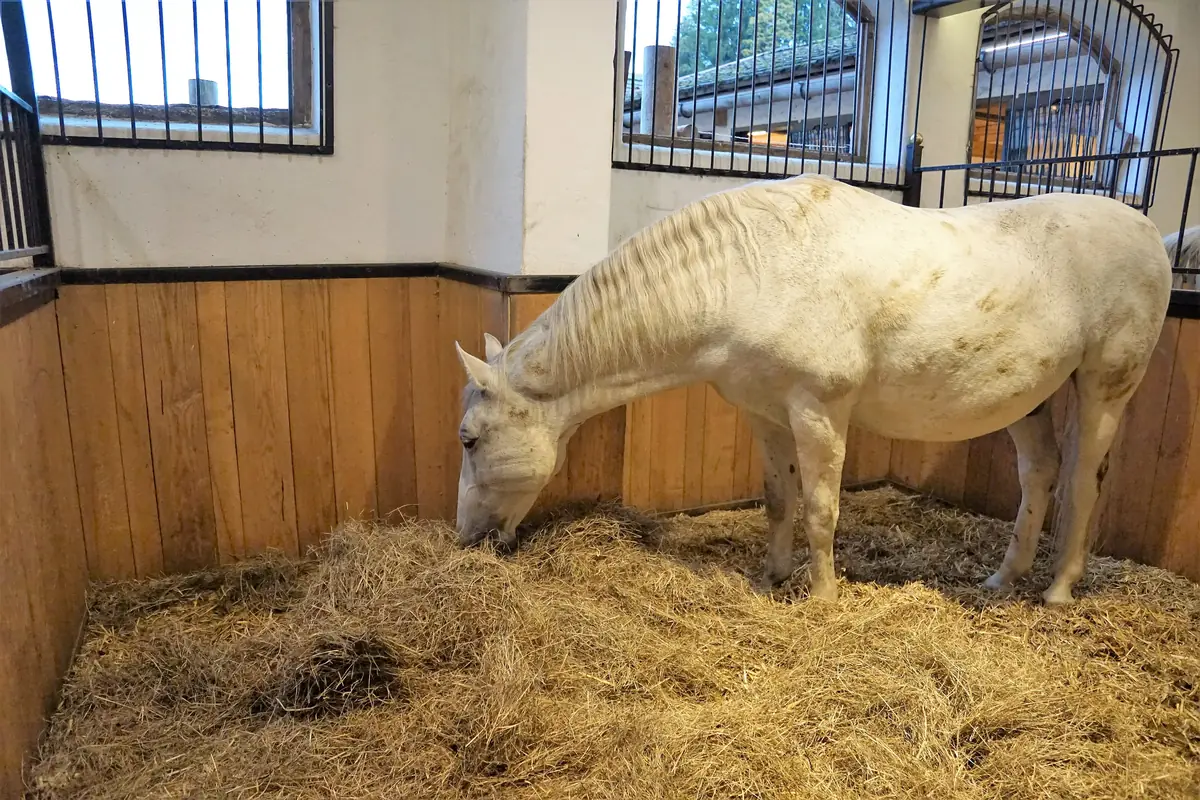
By the sixteenth century the Habsburgs ruled both Spain and Austria and wanted a powerful but agile horse for war and for the new riding schools of central Europe. Emperor Maximilian II brought Spanish horses to Austria in 1562. In 1580 his brother, Archduke Charles II of Inner Austria, founded a stud at Lipizza, now Lipica in Slovenia, from which the breed took its name. The name of the village comes from the Slovene word lipa, a linden tree.
Why the school says Spanish
The riding school's name goes back to the sixteenth century, when Spanish horses were brought to the Vienna court, according to the school's own account. The Lipizzaner descends from those horses, crossed over generations with other stock at Lipica. English Wikipedia describes Spanish, Barb and Arabian stock crossed there, and later the Neapolitan horse. The word Spanish in the school's name is about where the horses came from, and has nothing to do with where the riding school sits.
The stallion lines
Today eight foundation lines are recognised, which the registries call dynasties. Six trace to the classical stallions used at Lipica in the eighteenth and nineteenth centuries, and the school's stud at Piber breeds with six stallion lines, according to the school. The same page says the Lipizzaners of that time were a varied lot, brown, chestnut, dun, grey and black, and not one of them white. White, or rather grey, became established towards the end of the eighteenth century and in the nineteenth, preferred for how it looked.
Piber today
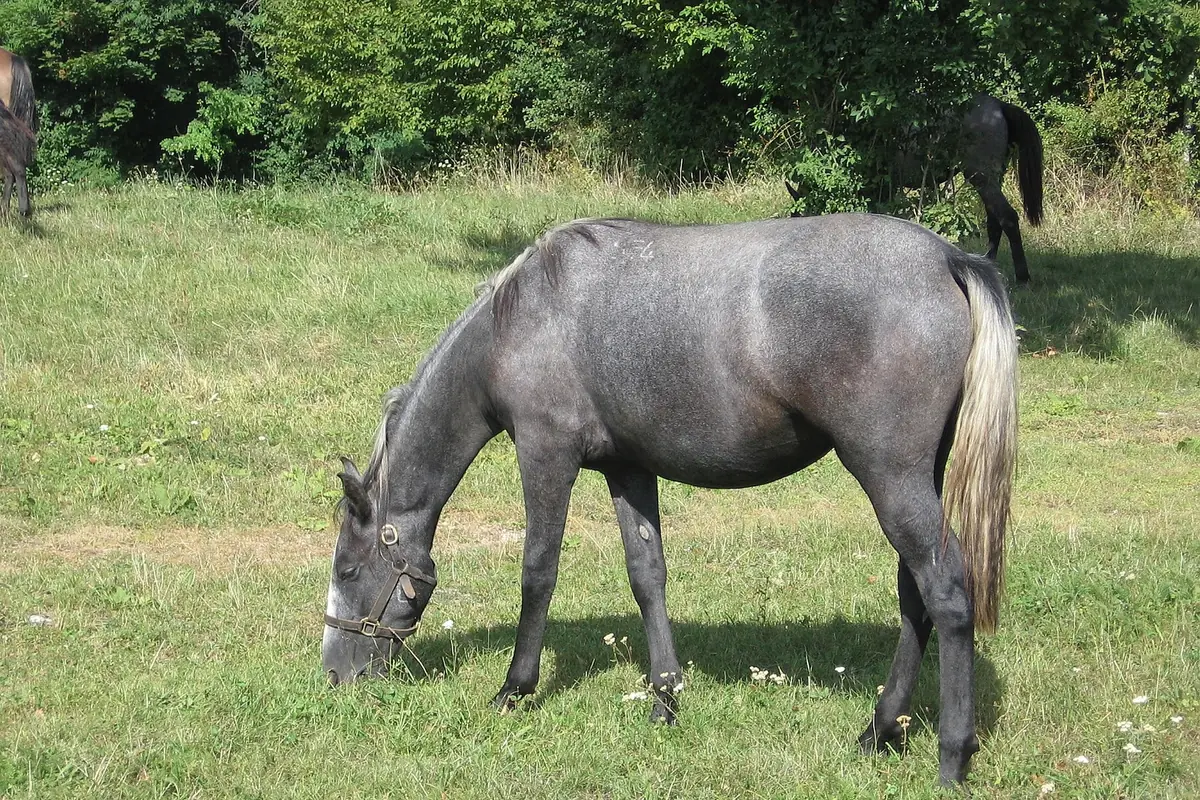
The Piber Federal Stud in western Styria was founded in 1798 and began breeding Lipizzaners in 1920. It is the main breeding farm for the stallions that the riding school uses. After the First World War the Austrian part of the herd was moved there, and the best young stallions are brought from Piber to Vienna for training. The riding school's page says the stud keeps six stallion lines and 17 mare lines from the eighteenth century. A Lipizzaner foal is born dark and greys over several years, so every stallion you see in Vienna is a long project.
A breed that war nearly lost
Warfare repeatedly endangered the breed, in the War of the First Coalition and in both world wars, according to Wikipedia. In the Second World War, most of Europe's Lipizzan breeding stock was moved to Hostau in Bohemia, and in the spring of 1945 a US cavalry unit reached the farm and the horses were brought across the border to safety. The story is known from a film, but the history is in the records of the breed. It explains why Piber exists in its present form.
The UNESCO listing
In 2022 UNESCO inscribed Lipizzan horse breeding traditions on the Representative List of the Intangible Cultural Heritage of Humanity, in a joint submission by eight countries: Austria, Bosnia and Herzegovina, Croatia, Hungary, Italy, Romania, Slovakia and Slovenia, according to Wikipedia. The riding school's own site adds that Lipizzaner breeding at Piber was recognised nationally in 2016. What is listed is the breeding tradition, not any one hall or performance, and that is worth keeping in mind when a visitor asks what the listing covers.
What this means for the morning
A stallion is first brought to the riding school at four years old, and Wikipedia says work on the longe, the long line, lasts two to three months before a rider is ever placed on his back. That is why the young horses in the hall are at an early stage of a long road. The same article says the stallions are taken to the school's summer stables in Lower Austria for seven weeks in July and August and are not schooled in that period, so the calendar on the booking page is the guide to which mornings run.
Sources